Standard First Aid Course Singapore 2026: Cost, Certification & Training Guide
Knowing how to respond during an emergency situation is not the same as knowing that you should do something. If the person is choking, losing excessive blood or having a heart attack, the first minutes require a few practical skills and clear decisions.
One option is the Standard First Aid Training Course. In Singapore, it is an officially recognised training program for people who need basic first aid skills, including coaches, fitness instructors and members of the public.
However, before signing up for it, there are several things to consider. How long does the course last? How much does it cost? Do I need to do the full course or a refresher course?
What Is a Standard First Aid Course?
In a Standard First Aid class, participants learn how to react to typical injuries and medical emergencies until the arrival of qualified medical professionals. The training program teaches first aid knowledge alongside practical skills.
In Singapore, Standard First Aid courses are accredited by the Singapore Resuscitation and First Aid Council (SRFAC), which sits under the Ministry of Health. SRFAC sets the syllabus, the assessment standard and the requirements training centres must meet to run the course. A certificate from an SRFAC-accredited centre is the one that counts for workplace, coaching and licensing purposes.
This class is more extensive than a CPR class. It includes various scenarios of emergencies and, therefore, is recommended to those who wish to have a complete understanding of basic first aid.
Who Should Take a Standard First Aid Course in Singapore?
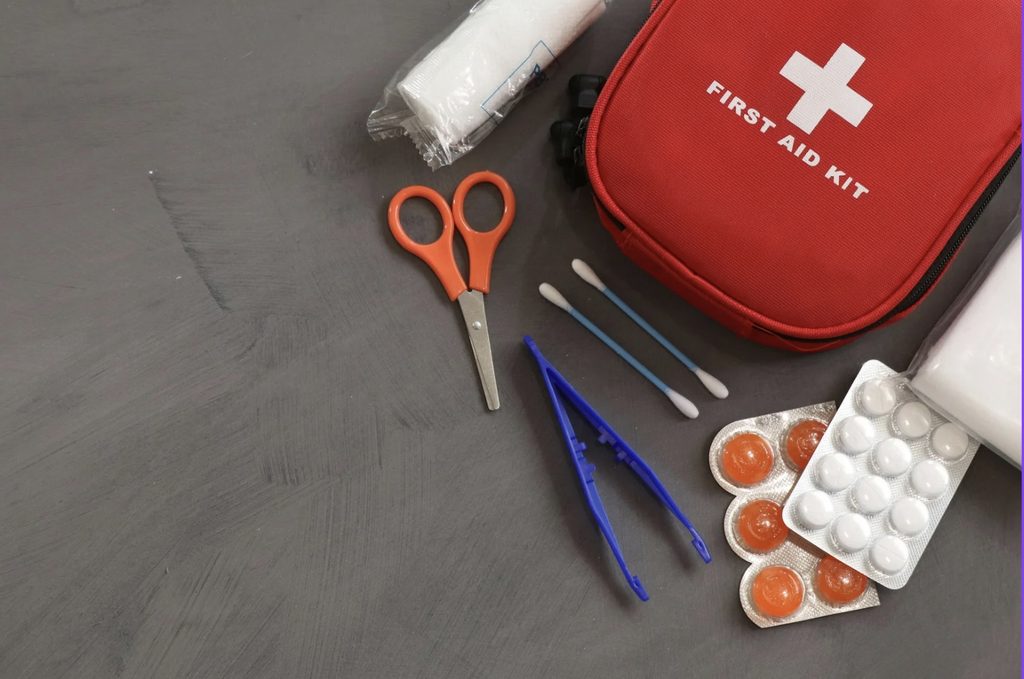
The Standard First Aid course can be beneficial for those who need it for professional purposes or even for personal preparation. This may include coaches, fitness instructors, community volunteers, and even individuals in the general public looking to get certified in first aid.
For instance, the MHI Standard First Aid course is intended for the general public looking to get certified as well as for coaches who must hold certification under SportSG/NROC. This course comprises theory, practical training, and assessment.
On the other hand, there might be cases where the Standard First Aid course will not be the right certification for your workplace or profession. Occupational First Aid and Child First Aid are not advanced versions of Standard First Aid. They are separate certifications governed by different authorities, and one does not substitute for another.
What Will You Learn in Standard First Aid Training?
In Standard First Aid, there is a blend of information on emergency response and practical skills. The aim is to help participants to respond appropriately while waiting for professional help to arrive.
Training commonly covers:
- CPR and the use of an Automated External Defibrillator (AED)
- Choking response
- Bleeding and wound management
- Burns and scalds
- Fractures, sprains and other injuries
- Shock and unconsciousness
- Medical emergencies such as stroke and seizures
Practical sessions are a crucial component of this course. Instead of learning procedures purely from a theoretical perspective, the attendees practise their skills under the supervision of instructors.
How Long Does a Standard First Aid Course Take?
Duration of courses varies depending on the institution providing the training and whether the trainee is new to the course or is undergoing refresher training.
For example, MHI’s Standard First Aid programme for new participants currently takes 16 hours in total:
- 6 hours of e-learning
- 6 hours of practical training
- 4 hours of assessment
The blended structure helps participants to complete the theory component online before moving into instructor-led practical training and assessment.
What Happens During Practical Training and Assessment?
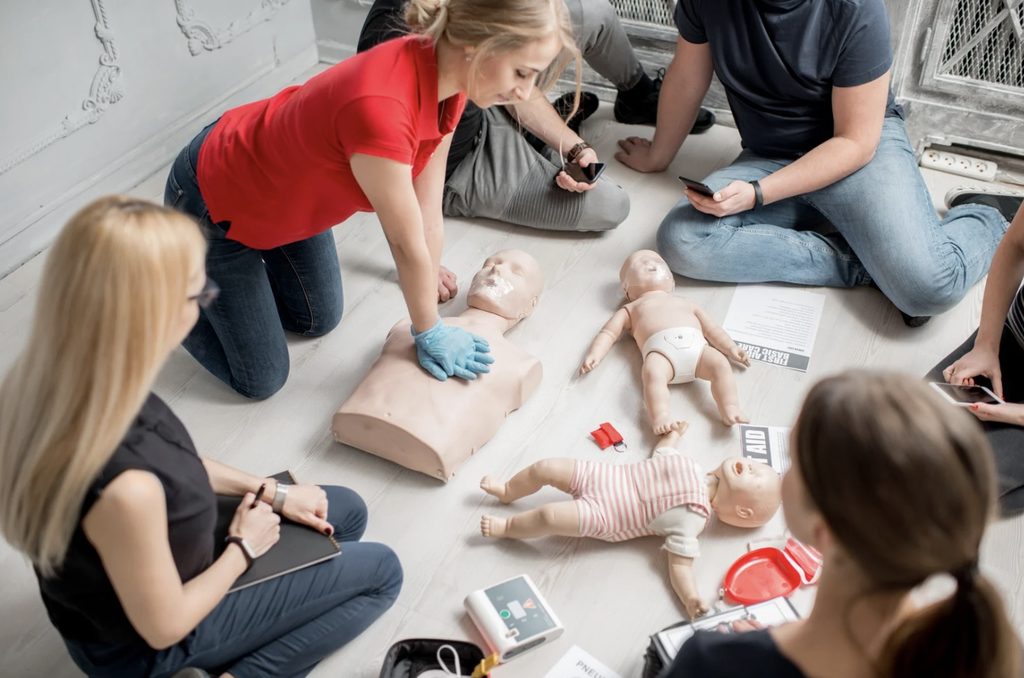
Standard First Aid doesn’t rely on theory alone. Practical training allows participants to put what they have learned into practice and to train in handling various emergency scenarios.
In practical training sessions, participants can practise performing CPR, using an AED, relieving choking and dressing wounds. The trainer will guide participants in order for them to improve their skills and gain more confidence before the official assessment.
The assessment has two parts. The written component is a 30-question multiple-choice paper with an 80% pass mark. The practical component requires you to demonstrate competency in the skills taught — CPR on adult, child and infant manikins, AED operation, choking relief, bandaging and casualty assessment.
Both must be passed. Certification is not issued on attendance, and completing the e-learning alone does not certify you. Certificates are typically issued digitally within five working days of a successful assessment.
How Much Does a Standard First Aid Course Cost in Singapore in 2026?
In Singapore, the fee for enrolling in a Standard First Aid course depends on various factors including the training institute offering the course, format of the course, and whether you are taking the course for the first time or if you have taken the course before.
For example, typical Standard First Aid fees are:
- New participant: S$180 before GST
- Refresher participant: S$160 before GST
With 9% GST, these work out to S$196.20 and S$174.40 respectively.
Moreover, Standard First Aid courses are typically eligible for SkillsFuture Credit and SSG training grants.
How Long Is Standard First Aid Certification Valid?
After completing the training and assessment, participants get their Standard First Aid certification. In Singapore, the certification is usually valid for a period of two years.
If you require this certificate for work purposes, coaching or any other professional reason, note the expiry date of the certificate. It is important to plan ahead for the renewal to avoid a lapse in certification.
Full Course vs Refresher: Which Applies to You?
A full Standard First Aid course is designed for new participants, while refresher training is intended for eligible participants renewing their existing certification.
As an example, the course structure may be:
| Course Component | New Participant | Refresher |
| E-learning | 6 hours | 2 hours |
| Practical training | 6 hours | 6 hours |
| Assessment | 4 hours | 4 hours |
| Total duration | 16 hours | 12 hours |
Eligibility for the refresher depends on timing. The refresher can generally be taken within a three-month window before or after your certificate’s expiry date. If you book inside that window, you complete the shorter course; if you miss it, you retake the full 16-hour course at the new-participant fee.
How to Choose a Standard First Aid Training Provider
Comparing courses on price alone can be misleading, since factors like training organisation and course design affect quality.
Before registering, consider:
- Whether the training centre is SRFAC-accredited, which you can verify on SRFAC’s website
- How much time is dedicated to practical training
- Instructor experience and guidance
- Assessment requirements
- Weekday or weekend course availability
- Location and accessibility
- Full course and refresher options
- Current fees and available funding.
There are also additional issues which may influence course selection, for instance, if you want to train a group of several employees.
Make the Most of Your Standard First Aid Training
Getting trained in a Standard First Aid Course in Singapore goes beyond just fulfilling a certification requirement. You need practical training and knowledge you can actually use in an emergency.
For a more detailed look at course fees, certification and what to expect during training, read this guide to the Standard First Aid course in Singapore.
Related Articles

Maxi Cab Services Price Guide Singapore 2026
Travelling as a group in Singapore becomes more complicated once passengers, suitcases and multiple vehicles enter the picture. A standard taxi might be just right for couples and small groups,…
Carpet Cleaning Prices in Singapore: What You’re Actually Paying For in 2026
Carpet cleaning is one of those household services that many Singapore homeowners postpone until a stain becomes impossible to ignore or the carpet starts looking noticeably tired. At first glance,…

How to Find Reputable Immersive Technology Companies in Singapore — Cost and Other Factors
Immersive technology in Singapore has moved well beyond being a novelty. What began as experimental AR filters and VR demonstrations has evolved into a practical business tool used across industries.…